In times of conflict and crisis, AI-led misinformation is already transforming the digital landscape. When independent journalism is restricted or punished, disinformation grows.
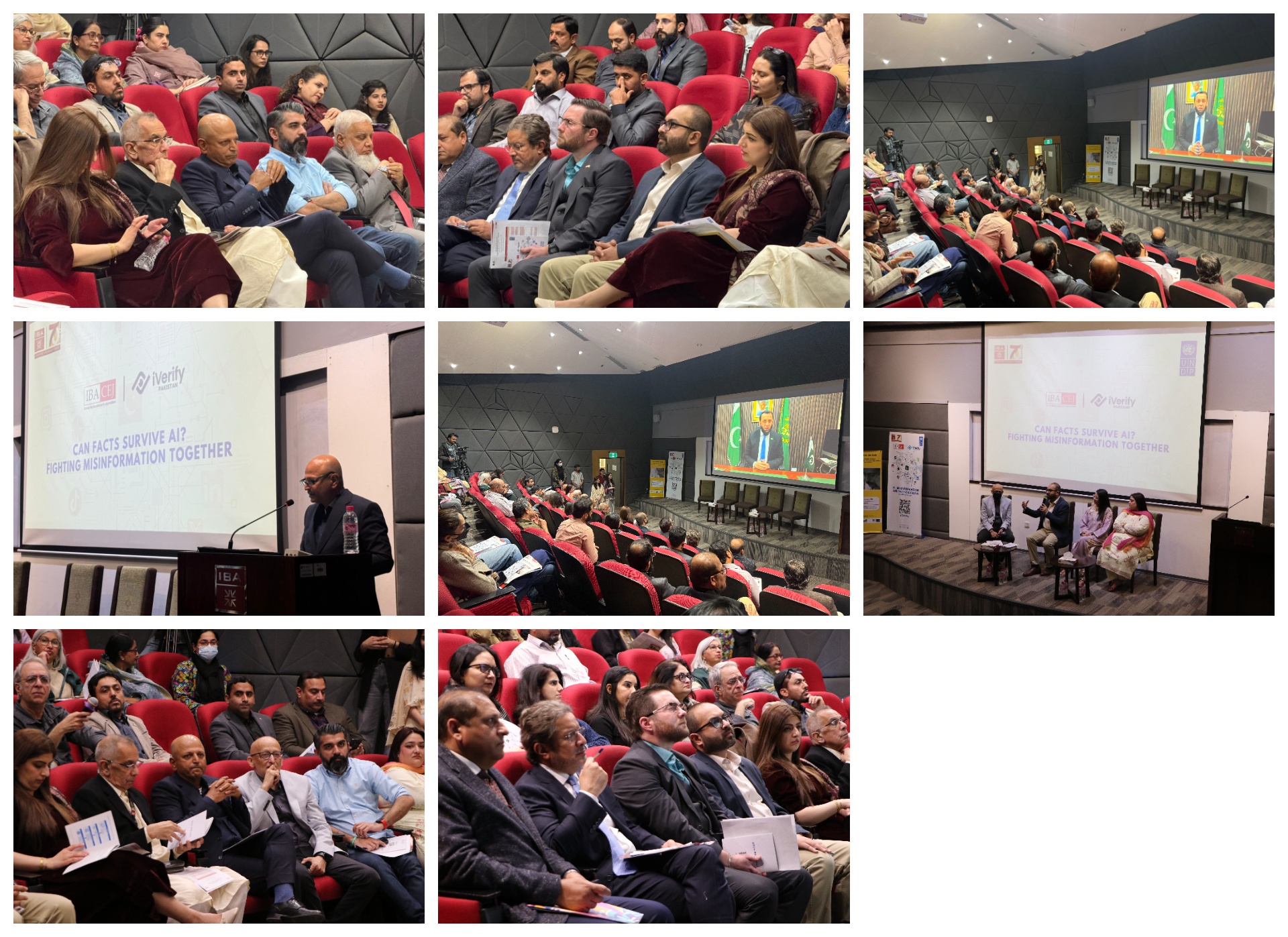
The Center for Excellence in Journalism at IBA Karachi hosted the launch of a landmark report by iVerify Pakistan, highlighting the transformative impact of AI-led misinformation on Pakistan’s digital landscape.
Covering two years of misinformation from December 2023 to November 2025, iVerify Pakistan analyzed 1,026 potentially false or misleading claims, with 513 claims undergoing in-depth verification across politics, religion, conflicts, and social issues. The analysis revealed that AI and digital platforms have amplified the speed and sophistication of misinformation, including deepfakes, doctored content, and false narratives.
Speaking at the event, Azhar Abbas highlighted the growing challenges posed by restrictions on mainstream media, noting that silenced news outlets allow unverified social media, anonymous platforms, and AI-driven networks to dominate the information ecosystem.
Shahzeb Jillani emphasized that while AI offers new opportunities in medicine, commerce, and agriculture, countering misinformation requires expanding the work of iVerify through collaboration across media, academia, and public institutions.
The importance of partnership was reinforced by Attaullah Tarar, who noted in his video remarks that initiatives like iVerify are crucial for safeguarding public trust, stating, “Misinformation cannot be tackled by the government alone. We are ready to support credible and impartial initiatives to fight disinformation.”
Opening the session, S. Akbar Zaidi observed that rising conflicts and civil unrest, such as the situation in Iran, make distinguishing facts from fiction increasingly difficult, and praised iVerify’s continued expertise in advancing factchecking in Pakistan.
The report identified deliberate tactics used to spread misinformation, including half-truths, missing or distorted context, mistranslation of foreign-language sources, impersonation of journalists and media outlets, and growing use of synthetic, doctored, and AI-generated content. Social media platforms — particularly X (formerly Twitter) — were found to be the primary amplifiers, while encrypted messaging platforms such as WhatsApp remained largely unobservable despite their influence on public opinion.
Launched in partnership with the UNDP Pakistan, the iVerify initiative has played a critical role in monitoring, verifying, and analyzing misinformation, particularly in the political domain, where narratives have routinely undermined electoral confidence, discredited opponents, and eroded trust in institutions.
The event highlighted the urgent need for collaboration among media, academia, and government institutions to counter AI-driven disinformation and strengthen fact-based public discourse in Pakistan.